

Building an effective LED spotlight system for retail stores requires more than installing a few fixtures. A true retail lighting system is a carefully designed combination of spotlight types, beam angles, circuits, controls, power planning, layout principles, product highlighting strategies, and long-term flexibility.
This guide walks you through every step of building a complete LED spotlight system from scratch—from understanding space requirements to selecting fixtures, planning power rails, determining beam angles, and designing lighting layers that support merchandising and brand identity.
Every good lighting system starts with understanding the space.
What type of retail store is it?
What are the main product categories?
Are displays fixed or frequently updated?
How tall is the ceiling?
Where will focal points be placed?
Does the store need a premium or dynamic atmosphere?
Lighting must support the merchandising—not the other way around.
A complete retail lighting system relies on three layers:
Purpose: provide general visibility and a comfortable lighting base.
Purpose: highlight merchandise, tell brand stories, and attract customer attention.
Purpose: enhance mood via pendants, linear lights, or brand signature lighting.
Your spotlight system is mainly the accent layer, but it must integrate well with the other two.
Most retail spotlight systems rely on track lighting because it allows flexibility.
Single-circuit track → simple small shops
Two-circuit track → separate zones for dimming
Three-circuit track → flexible multi-zone control
DALI track → fully programmable scenes
Adjustable recessed spotlights
Surface-mounted spotlights
Suspended spotlights for tall ceilings
Choosing the right mounting method determines long-term adaptability.
350° rotation
30°–90° tilt
Ideal for mannequins, feature tables, and walls
Clean visual finish
Good for boutiques & luxury stores
Jewelry, watches, hero items
Perfect for shelves, wall displays, branding walls
Essential for fashion, cosmetics, luxury goods
This combination covers all display needs.
Beam angle determines how each product is visually presented.
10°–15° → hero items, jewelry, small products
15°–24° → mannequins, premium fashion displays
24°–36° → shelves, wall displays, lifestyle products
36°–60° → soft fills or wider product areas
<3 m → medium/wide beams
3–4 m → 24°–36°
4–6 m → narrow beams (10°–24°)
Spotlights must match the physical environment AND the merchandising.
Retail lighting depends on contrast, not brightness.
3:1 — general retail
5:1 — premium retail
8:1 — jewelry or luxury
Attracts customer attention
Creates a premium atmosphere
Defines retail storytelling
Helps customers find new arrivals faster
Spotlights = higher brightness
Downlights = soft brightness
Mix them with intention.
Break the retail space into zones and assign spotlight types accordingly.
Narrow beams
Highest contrast
Visual impact from first step
Adjustable track spotlights
Seasonal repositioning
Strong aiming angles
Strong accent lighting
Fresh, bright presentation
Wall-washer spotlights
High CRI, medium beam
Downlights for general illumination
Spotlights for merchandising emphasis
Soft downlights
No top-down shadows
A retail spotlight system must be designed by zone—not by guesswork.
Dimming allows lighting to adapt to:
Time of day
Natural daylight
Promotions
Seasonal themes
Window displays
Mood changes
DALI
0–10V
Triac (small stores)
Wireless BLE or Zigbee
Scene-based control = dynamic merchandising.
A complete LED spotlight system is only as good as its components.
Flicker-free drivers (<5%)
TIR precision lenses
High CRI chips
Good heat dissipation
Cheap plastic lenses
Weak drivers with flicker
Inconsistent LED binning
These factors ensure long-term visual quality.
Retail is dynamic. Your spotlight system must be too.
Use track systems
Avoid fixed spotlight positions
Choose adjustable heads
Add extra power rails
Keep ceiling design serviceable
A retail lighting system is an investment—design it to last.
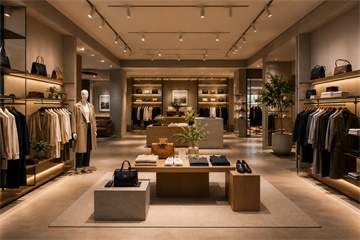
A complete LED spotlight system for retail isn’t just a collection of fixtures—it is a strategic design tool that shapes customer experience, supports merchandising, and strengthens brand identity.
Flexible spotlight positioning
Perfect product illumination
Clean ambient foundation
High CRI, high uniformity, low glare
Adjustable scenes for changing needs
Strong contrast ratios
Seamless integration with store design
Lighting is not decoration.
Lighting is strategy.
And the right LED spotlight system brings a retail space to life.